
Your Destination For High-Quality And Effective Orthodontics
Achieve the smile you want with orthodontics. We provide effective, personalised treatment plans featuring discreet options that maintain comfort while straightening teeth.
Braces or Clear Aligners? Listen to Tim on which is best for you.
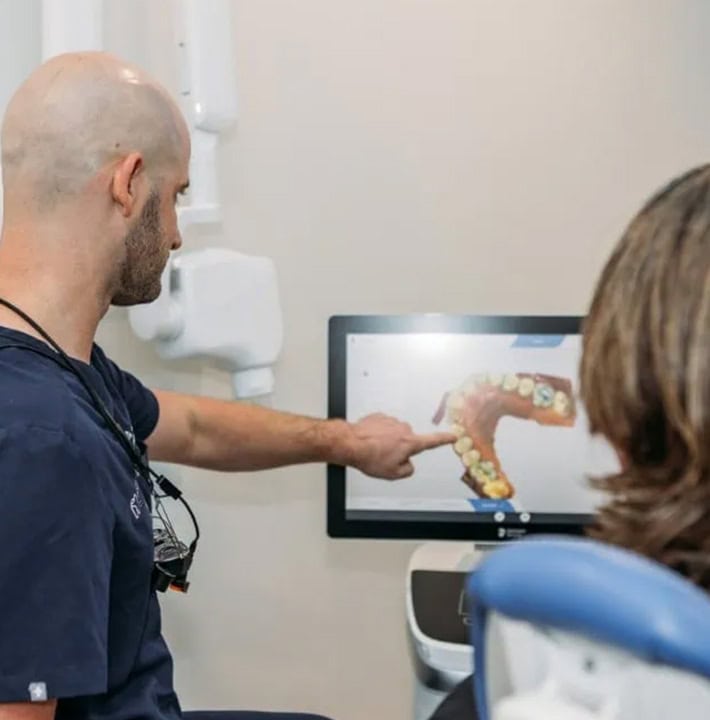
Orthodontics And Its Impact On Achieving Balanced, Aligned, And Healthy Smiles
A beautiful, balanced smile is often compromised by misalignment, which can result from many factors like genetics, injuries, or bad oral habits. These common issues can affect overall dental health and lead to discomfort when chewing or speaking, impacting one’s self-confidence during social interactions.
Orthodontic services effectively address these common concerns by aligning crooked teeth and bites, which enhances both functionality and aesthetics. Improved alignment not only alleviates discomfort but also promotes better oral hygiene, leading to a healthier, more attractive smile.

How To Determine If You Are A Candidate For Orthodontics
Assessing if you’re an ideal candidate for orthodontics is an important part of an effective treatment. Consider the following characteristics to see if orthodontic treatment might be right for you:
- Patients with misaligned teeth, gaps, or bite issues, such as overbites or underbites, are strong candidates for orthodontic treatment.
- Adequate bone density in the jaw is necessary to support tooth movement during the treatment.
- Active dental conditions, like cavities or gum infections, must be addressed before starting orthodontic treatment to avoid complications.
- Good oral hygiene is essential, as orthodontic appliances can increase the risk of plaque and food accumulation around the teeth.
What Are The Key Benefits Of Choosing Orthodontic Treatments?
Orthodontic treatments offer more than just aesthetic improvements; they contribute significantly to the patient’s oral health and overall quality of life. Here are the most valuable benefits of orthodontic treatment:
- Enhancing the alignment of teeth boosts confidence and self-esteem by creating a more appealing smile.
- Straightening crowded teeth improves oral hygiene by making it easier to clean between teeth, reducing the risk of decay and gum disease.
- Proper alignment can alleviate stress on the jaw and teeth, preventing long-term damage and reducing discomfort from an improper bite.
- Properly aligned teeth contribute to better overall health by improving oral functionality and digestion.

Orthodontic Services
Achieving a straighter smile is possible through orthodontics in Inglewood, which offers comfort and convenience while addressing alignment issues.


Schedule Your Consultation Today
Experience Exceptional Dental Treatments for a Healthier, Brighter Smile

Frequently Asked Questions
Do orthodontic treatments hurt, and how can discomfort be managed?
Yes, orthodontic treatment can cause mild, manageable discomfort as braces or aligners apply gentle pressure to shift your teeth into position. The soreness is temporary as your mouth adjusts, and you can ease it in several ways:
- Apply ice packs: Cold on the affected area reduces swelling and numbs soreness.
- Use dental wax: Covering brackets or wires forms a protective barrier that prevents friction and mouth sores.
- Eat soft foods: Yoghurt, smoothies, and soups require little chewing and ease pressure on teeth and gums.
- Rinse with salt water: Warm salt water several times a day soothes sore gums and helps heal mouth sores.
- Over-the-counter pain relievers: Used as advised by a health professional, these reduce swelling and block pain.
How long does orthodontic treatment typically take?
Orthodontic treatment typically takes 12 to 18 months with clear aligners such as Invisalign, 18 to 24 months with metal or ceramic braces, and 18 to 36 months with lingual braces. The exact time depends on your needs and how closely you follow the plan:
- Clear aligners (Invisalign): 12 to 18 months on average, removable and with fewer adjustments.
- Traditional metal braces: About 18 to 24 months, the most commonly chosen option.
- Ceramic braces: Around 18 to 24 months, working like metal braces but less noticeable.
- Lingual braces: 18 to 36 months, fitted behind the teeth and harder to adjust.
Can orthodontics help with jaw alignment issues?
Yes, orthodontics can correct jaw alignment issues such as overbites, underbites, and crossbites using appliances like braces, clear aligners, and palatal expanders. Braces are especially versatile, applying continuous pressure to reposition teeth and jaws, while clear aligners may not suit severe misalignment and palatal expanders widen the upper jaw only. A consultation determines the most effective option for your specific concern.
How often will I need to visit the dentist during my orthodontic treatment?
You will usually need an orthodontic visit every four to eight weeks so your dentist can keep treatment on track. These regular check-ups serve several purposes:
- Adjusting appliances: Braces are tightened regularly; clear-aligner patients receive new sets about every two weeks.
- Monitoring progress: The dentist tracks tooth movement and adjusts the plan as needed.
- Addressing issues: Any pain or problems are dealt with promptly to avoid complications.
- Maintaining oral health: Visits help prevent gum disease and tooth decay during treatment.
What age is ideal for children to begin orthodontic treatment?
Children can have an orthodontic evaluation as early as age seven, when a dentist can assess how the adult teeth are developing and spot early jaw-growth issues. Early detection allows timely intervention that guides proper jaw growth and tooth alignment, often reducing the need for more invasive treatment later and leading to better outcomes for the child.
Can adults still get orthodontics for teeth straightening?
Yes, adults can still get orthodontics for teeth straightening at any age, as long as their teeth and gums are healthy. Treatment may take a little longer because the bones are no longer growing, and any existing issues such as gum disease or missing teeth are addressed first. Discreet options like clear aligners or ceramic braces fit easily into adult lifestyles, making the benefits well worth it.
How much do orthodontic treatments usually cost?
Orthodontic costs vary by treatment type and case complexity — as a guide, Invisalign full treatment ranges from $6,000 to $9,000, metal braces up to $8,000, ceramic braces $5,000 to $8,500, clear braces $2,000 to $9,000, and lingual braces from $7,500 for a single arch up to $12,500 for full treatment:
- Invisalign (full treatment): $6,000 to $9,000, removable and custom-made.
- Traditional metal braces: Up to $8,000.
- Ceramic braces: $5,000 to $8,500, with tooth-coloured brackets.
- Lingual braces: From $7,500 (single arch) and from $12,500 (full treatment).
- Clear braces: $2,000 to $9,000, nearly invisible.
Your final cost depends on treatment duration, appliance type, and any additional procedures, so a consultation gives the most accurate estimate.
What happens during an initial orthodontic consultation?
During an initial orthodontic consultation, expect an examination of your teeth and bite, dental X-rays, impressions or digital scans, a discussion of treatment options, a cost and timeline overview, and time for your questions. The typical steps are:
- Examination: Checking your teeth, gums, and bite for alignment and oral health issues.
- Dental X-rays: Showing the teeth, roots, and jawbone to evaluate position and growth.
- Impressions or digital scans: Creating a model of your teeth for treatment planning.
- Treatment options: Discussing suitable braces or aligners based on the findings.
- Cost and timeline: Outlining the price, duration, and steps involved.
- Questions: Time to raise any concerns so you feel informed and confident.
How should I care for my teeth during orthodontic treatment?
Care for your teeth during orthodontic treatment by brushing after every meal, flossing daily with orthodontic floss, using an interdental brush and antibacterial mouthwash, limiting hard and sticky foods, and keeping regular check-ups. The key steps are:
- Brush after every meal: Use a soft-bristled brush and fluoride toothpaste to remove plaque and food.
- Floss daily: Use floss threaders or floss designed for braces to clean between teeth.
- Use an interdental brush: Cleans around brackets and wires where food gets trapped.
- Rinse with mouthwash: An antibacterial rinse reduces bacteria and freshens breath.
- Limit hard and sticky foods: Avoid nuts, popcorn, caramel, and gum that can damage braces.
- Keep regular check-ups: See your dentist every four to eight weeks to monitor progress.
Are there any foods I should avoid while undergoing orthodontic treatment?
Yes, with braces you should avoid hard, sticky, crunchy, chewy, and sugary foods that can damage brackets or wires, while clear aligners have few restrictions because you remove them to eat. With aligners, only lukewarm or cold water should be drunk while they are in, but with braces avoid:
- Hard foods: Hard candies, nuts, and ice can break brackets or wires.
- Sticky foods: Caramel, toffee, and gum get stuck and make cleaning difficult.
- Crunchy foods: Popcorn, chips, and raw carrots can loosen brackets.
- Chewy foods: Bagels, licorice, and tough meats can pull on and damage braces.
- Sugary foods and drinks: Sweets, sodas, and juices increase plaque and decay risk.