
Achieve A Confident Smile With Dental Implants
Why I Got Dental Implants
Former WA Premier Brian Burke's Journey at Azure Dental
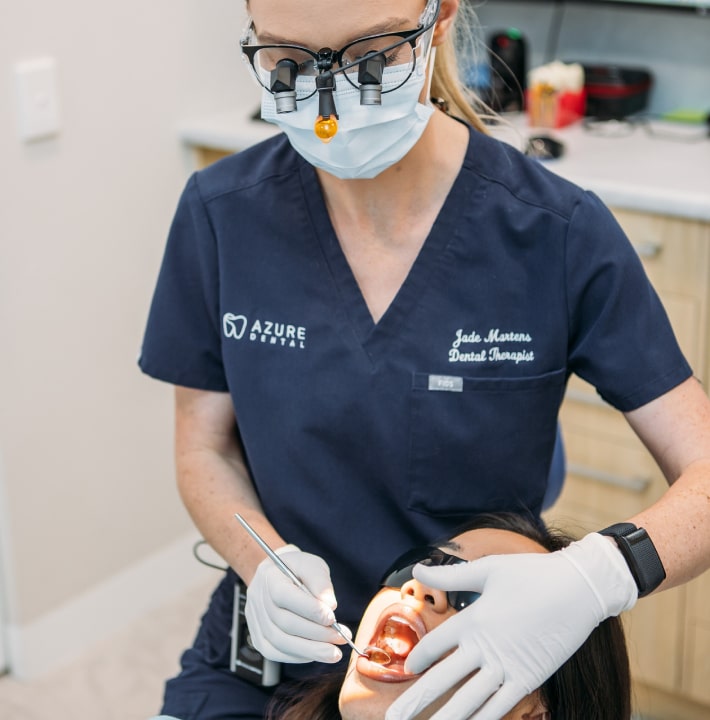
Dental Implants: How They Function, Enhance Smiles, And Improve Oral Health
Losing teeth not only impairs chewing and speech but also triggers jawbone degradation, leading to significant changes in facial structure and overall dental health. This can diminish confidence and comfort, making everyday interactions and activities more challenging.
Dental implants provide a practical option by anchoring to the jawbone, offering a stable base for artificial teeth that perform like natural ones. This approach not only restores functionality but also helps preserve the facial structure, improving oral health and physical appearance sustainably.

What Makes Someone A Good Candidate For Dental Implants
Dental implants are an effective option for people looking to replace missing teeth, but certain factors determine eligibility. Let’s explore the characteristics that make someone an ideal candidate for implants:
- Adequate jawbone density is critical to support the implant securely and promote proper healing.
- Good overall oral health, free from gum disease or significant decay, is important for successful implantation.
- Ideal candidates should be non-smokers or those willing to quit smoking, as smoking can hinder healing.
- Candidates should be in generally good health, as certain medical conditions or medications may affect recovery and the implant’s success.
Understanding The Benefits Of Dental Implants For Long-Term Oral Health
Dental implants contribute significantly to maintaining oral health over time. To better understand their impact, let’s look at the benefits they provide for improving both functionality and overall dental health:
- Dental implants help prevent bone loss by stimulating the jawbone, reducing the risk of bone deterioration after tooth loss.
- Implants provide stability and support for chewing, allowing patients to eat a wide range of foods without discomfort.
- They offer a natural look and feel, blending with your existing natural teeth.
- With proper care, dental implants can function well for many years, making them a durable option for tooth replacement.

Dental Implant Services
Explore various dental implants in Perth, which are designed to enhance function and aesthetics with the latest in implant technology.


What To Expect During The Dental Implants Consultation Process
Comprehensive Oral Health Assessment
During the first part of the consultation, the dentist thoroughly examines your mouth to assess teeth, gums, and oral health. They identify conditions that could impact the success of the implant, such as gum disease. The dentist also evaluates your jawbone's strength to see if it can support the implant.
Detailed Medical History Review
Next, your dentist reviews your medical history, including medications and chronic conditions. This helps identify factors that could influence healing or increase the risk of complications during the implant procedure. The review allows the dentist to adjust the treatment plan to match your specific health needs for a safe experience.
Diagnostic Imaging and Scans
During this step, advanced imaging tools like X-rays or CT scans are used to get a detailed view of your jaw and surrounding structures. These images help pinpoint the ideal placement for the dental implant. Additionally, the scans detect any bone loss or other issues that might affect the procedure.
Personalised Treatment Plan Discussion
At this point, the dentist will go over your diagnostic results and explain a personalised treatment plan based on your specific oral health. You'll learn the steps of the implant process, including the timeline. Any concerns you have will be addressed so you understand what lies ahead.
Questions and Concerns Addressed
In the final step, the dentist allows you to ask any remaining questions about the procedure, recovery, or long-term care. This is your chance to clarify concerns and receive detailed answers. The dentist wants you to leave the consultation feeling informed and confident about your upcoming dental implant journey.
Pricing Guide
Explore our dental implant pricing guide for a clear understanding of the costs associated with our range of implant options.
Single Implants
Starts at
$6,500 AUD
- Single implants replace one missing tooth without altering or depending on adjacent teeth, making it a standalone restoration.
- They prevent the remaining teeth from shifting into the gap, maintaining proper bite function and oral stability.
- Single implants are designed to function like natural teeth, offering long-term durability and comfort while improving daily oral activities such as chewing and speaking.
All-on-4 Implants
Starts at
$27,500 AUD
- Requires fewer implants than traditional methods, making it less invasive and reducing recovery time compared to placing each implant.
- Provides immediate function, allowing patients to eat, speak, and smile confidently soon after the procedure.
- Minimises or eliminates the need for bone grafting by strategically placing implants in areas of high bone density, even for those with significant bone loss.
Implant-Retained Dentures
Starts at
$18,000 AUD
- Implant-retained dentures offer enhanced stability compared to traditional dentures, providing a secure fit that improves chewing and speaking ability.
- Each piece combines elegance and strength for a long-lasting finish.
- This option helps preserve the jawbone by stimulating it with implants, reducing bone loss commonly associated with traditional dentures and maintaining facial structure.
Schedule Your Consultation Today
Experience Exceptional Dental Treatments for a Healthier, Brighter Smile

Frequently Asked Questions
What is the process for getting dental implants?
Getting dental implants is a multi-step process that usually spans several months: an initial consultation, imaging, treatment planning, any needed extractions or bone grafting, surgical placement, a healing period, then fitting the abutment and final crown. The typical steps are:
- Initial consultation: Your dental history and a full oral examination determine whether implants are suitable.
- Dental imaging: X-rays or CT scans assess your jawbone and map the implant placement.
- Treatment planning: A detailed plan specifies where and how the implants will be placed.
- Tooth extraction (if needed): Any teeth at the implant site are removed first.
- Jaw preparation (if needed): A bone graft may be done if the jawbone is not thick enough.
- Implant placement: The implants are surgically placed into the jawbone under local anaesthesia.
- Healing period: The jawbone heals and grows around the implant to secure it.
- Abutment placement: An abutment is fitted to hold the artificial tooth.
- Prosthesis fitting: The final crown or replacement teeth are attached and adjusted for a natural fit.
Is dental implant surgery painful?
No, dental implant surgery should not be painful, because it is performed under local anaesthesia that numbs the surgical area. For patients who feel particularly anxious, sedation and sleep dentistry options are available to provide a relaxed, comfortable experience throughout the procedure.
How long does it take to recover from dental implant surgery?
Initial healing after implant surgery takes about one to two weeks, while full integration with the jawbone takes three to six months. Recovery has two key phases:
- Initial healing phase: Around one to two weeks, during which discomfort and swelling subside.
- Osseointegration phase: Three to six months, during which the implant fully attaches to the jawbone, creating a solid base for the replacement tooth.
How long do dental implants last?
With proper care, dental implants can last for many years — the implant post itself around 20 years, and the attached crown, bridge, or denture typically 5 to 15 years. Their lifespan depends largely on good oral hygiene and attending regular dental check-ups.
Will my dental implants look and feel like natural teeth?
Yes, your dental implants will look and feel just like natural teeth. They are anchored securely into your jawbone for stability when speaking and eating, and the crowns are matched in colour and shape to blend with your existing teeth for a natural appearance.
Can dental implants be used to replace multiple missing teeth?
Yes, dental implants can replace multiple missing teeth using a few implants to anchor a bridge or denture, known as an implant-supported bridge or implant-retained denture. This avoids needing one implant per tooth, spreads bite pressure across the jawbone, and helps maintain bone structure and prevent bone loss.
How much do dental implants cost?
Dental implants in Perth start from $2,800, with the final cost depending on several factors:
- Number of implants: More implants increase the cost, as each requires materials and surgical placement.
- Bone grafting: Building up insufficient jawbone density adds to the complexity and cost.
- Type of implant: Different materials and brands vary in price.
- Additional procedures: Preparatory treatments such as extractions or sinus lifts increase the total.
A detailed consultation lets us provide an accurate estimate tailored to your needs.
Are dental implants covered by health funds?
Dental implants may be partially covered by health funds, but the amount varies because implants fall under major dental cover rather than general dental.
Since they involve both surgical and restorative phases, your policy, annual limits, and waiting periods all affect your benefit, so it is best to contact your health fund to confirm the exact cover.
What are the risks or complications associated with dental implants?
Dental implants are generally safe, but possible risks include infection, nerve damage, sinus issues, peri-implantitis, and bone loss around the implant. Understanding each helps you prevent it:
- Infection: Can develop at the implant site if bacteria enter or oral hygiene is poor.
- Nerve damage: May cause numbness or tingling if an implant sits too close to a nerve in the lower jaw.
- Sinus issues: Upper-jaw implants can affect the sinus cavity if there is insufficient bone height.
- Peri-implantitis: Inflammation around the implant from plaque buildup or excessive biting force.
- Bone loss: The surrounding bone can deteriorate if the implant does not stimulate it or hygiene is not maintained.
Consistent oral hygiene and routine check-ups greatly reduce the likelihood of these complications.
Can I get dental implants if I have bone loss in my jaw?
Yes, you can still get dental implants if you have jaw bone loss, because bone grafting can rebuild enough density to anchor the implant securely.
Depending on the extent of loss, grafting may be done before or during placement, and techniques such as sinus lifts help make implants possible in the upper jaw.
How do I care for my dental implants after the procedure?
Care for your dental implants by brushing twice daily, flossing with implant-friendly floss, using an antibacterial mouthwash, avoiding hard foods while healing, attending regular check-ups, and not smoking. In more detail:
- Maintain oral hygiene: Brush twice daily with a soft-bristled brush and low-abrasive toothpaste, cleaning thoroughly around the implant.
- Floss daily: Use implant-friendly floss or interdental brushes to reach where brushing cannot.
- Use antibacterial mouthwash: Reduces bacteria and infection risk, especially during healing.
- Avoid hard foods: Choose softer foods early on to avoid stressing the implant site.
- Attend regular check-ups: Lets your dentist clean around implants and catch issues early.
- Avoid smoking: Smoking slows healing and raises the risk of implant failure.
Can I eat normally with dental implants?
Yes, once healing is complete you can eat normally with dental implants, as they function like natural teeth. During the initial healing period you may need softer foods to avoid stressing the implant site, but afterwards you can gradually reintroduce crunchy and chewy foods and eat with confidence thanks to the implant’s stability.
What should I expect during a dental implant consultation?
During a dental implant consultation, expect a dental examination, imaging such as X-rays or CT scans, a medical history review, a personalised treatment plan, a cost breakdown, and time for your questions. Each step covers:
- Dental examination: Assessing your teeth, gums, and jawbone for implant suitability.
- Dental imaging: Checking jawbone density to plan placement.
- Medical history review: Identifying medications or conditions that affect the procedure.
- Treatment planning: Explaining the number of implants needed and the timeline.
- Cost and financing: A breakdown of potential costs and influencing factors.
- Q&A session: Answering your questions about the procedure, recovery, and care.
How do I prepare for dental implant surgery?
To prepare for dental implant surgery, tell your dentist about your medications, avoid smoking beforehand, arrange transport home, stock up on soft foods, follow any fasting instructions, and wear comfortable clothing. In more detail:
- Discuss your medications: Share all prescriptions, over-the-counter drugs, and supplements to avoid interactions.
- Avoid smoking: Stop for at least a few weeks beforehand to support healing.
- Arrange transportation: Have someone drive you, as sedation may affect driving.
- Stock up on soft foods: Makes eating easier during initial healing.
- Follow pre-surgery instructions: Including fasting if sedation is used.
- Wear comfortable clothing: Loose clothing helps you relax during the procedure.
Are there any age restrictions for getting dental implants?
No, there are no specific age restrictions for dental implants, though certain dental conditions must be met for success. Younger patients need a fully developed jawbone, which usually occurs around 18 to 20 years of age, while older adults remain good candidates as long as their overall health and bone density are adequate. Your dentist assesses these factors to determine suitability regardless of age.